Laxmi Conveyor is a trusted name of Material Handling Conveyor system, Our company continues to provide world-class conveyor solutions that enhance productivity industrial operations. We specialize in designing and upgrading conveyors that align with modern industry needs. Whether it’s moving raw materials, transporting finished goods, or automating repetitive tasks, conveyors make material flow faster, safer, and more reliable.
What Is a Material Handling Conveyor?
A material handling conveyor is a mechanical system used to transport materials from one location to another within a facility. These conveyors reduce manual labor, minimize material damage, and improve overall workflow efficiency. They can be found in almost every sector — from manufacturing and packaging to mining and food processing.
Types of Material Handling Conveyors
There are various types of material conveyor systems, each designed to handle different materials, capacities, and environmental conditions. Below are the most common types:
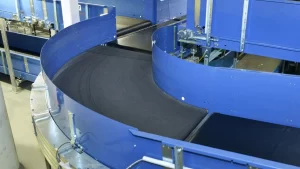
- Belt Conveyors: Belt conveyors are among the most widely used conveyor types in industries. They use a continuous belt made of rubber, PVC, or fabric to transport goods. This type of material handling conveyor is perfect for moving lightweight items such as boxes, packages, and food products.
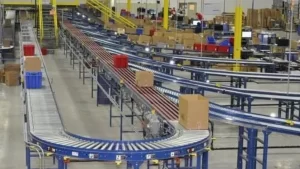
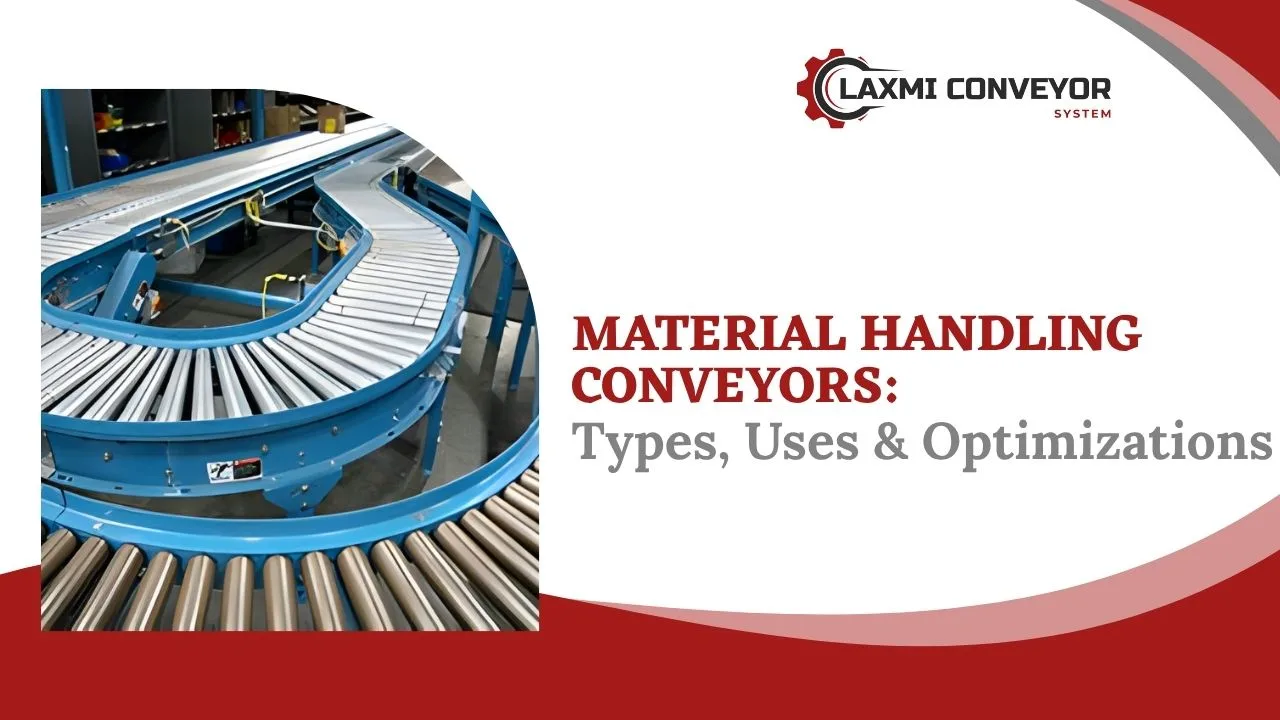
- Roller Conveyors: Roller conveyors consist of a series of rotating rollers that move items along the line. They are ideal for heavy loads, pallets, and large containers. These systems are widely used in warehouses and assembly lines where flexibility and high load capacity are essential.
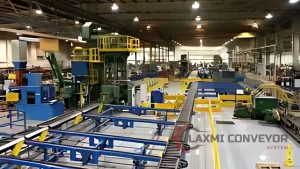
- Chain Conveyors: Chain conveyors use interconnected chains to move products along a fixed path. They are suitable for heavy-duty operations, especially in industries like automotive manufacturing, steel, and foundry.
- Screw Conveyors: Screw conveyors use a rotating spiral screw blade to move granular or semi-solid materials like grains, powders, and cement. They are commonly used in agriculture, food processing, and chemical industries.
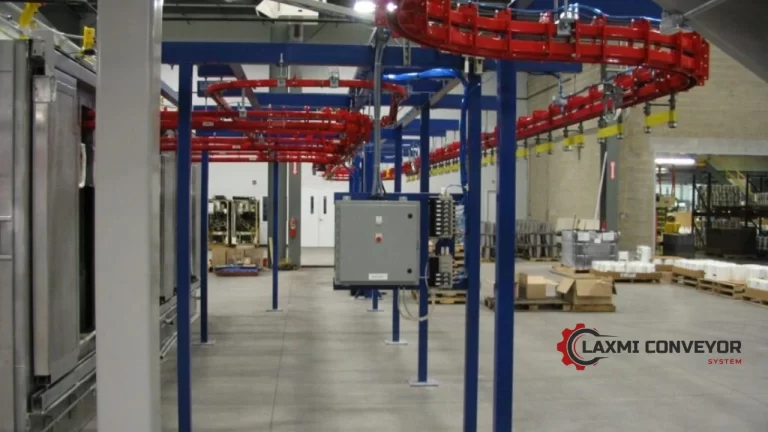
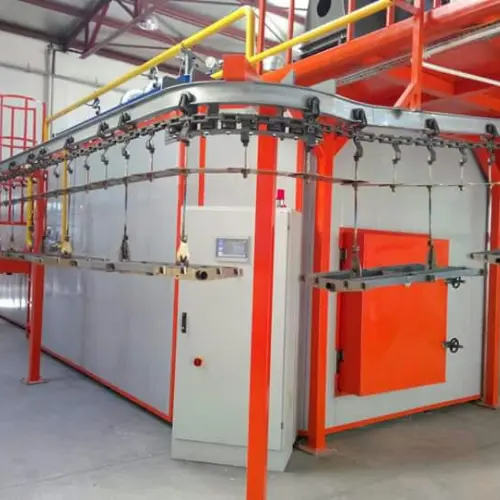
- Overhead Conveyors: Overhead conveyors are excellent space-saving solutions, particularly useful in small or crowded production areas. They use an overhead track system that moves products suspended from hooks or carriers. These conveyors are widely used in painting lines, garment production, and automobile assembly plants.
- Bucket Elevators: Bucket elevators are vertical material conveyor systems designed for lifting bulk materials like grains, cement, and aggregates to higher levels. They are efficient, compact, and capable of handling large volumes safely.
Uses of Material Handling Conveyors
Material handling conveyors are used across multiple industries for various applications:
- Manufacturing: For transporting raw materials and components between workstations.
- Warehousing and Distribution: To automate loading, unloading, and sorting of goods.
- Food and Beverage Industry: For hygienic and efficient movement of packaged or bulk food items.
- Automotive Industry: To transfer heavy vehicle parts and assemblies.
- Mining and Construction: For moving stones, coal, and other raw materials safely and efficiently.
- Packaging Industry: For transporting products during labeling, filling, or sealing processes.
By incorporating modern automation and control systems, material conveyor systems have become integral to improving operational speed and reducing manual effort.
Also Read : Overhead Conveyor for Small Wood Shop
Optimization of Material Handling Conveyors
Optimizing conveyor material handling equipment involves improving efficiency, minimizing energy use, and extending system lifespan. Laxmi Conveyor specializes in designing and upgrading conveyors that align with modern industry needs.
Here are some ways to optimize these systems:
- Automation Integration: Incorporating sensors, PLC controls, and IoT devices enables real-time monitoring and automation, improving performance and reducing downtime.
- Material Selection: Using the right belt material, rollers, and chains ensures longevity and reduces maintenance costs.
- System Layout Design: Customizing the layout to suit workflow reduces unnecessary material movement and increases productivity.
- Energy Efficiency: Using variable frequency drives (VFDs) and energy-efficient motors helps minimize power consumption.
- Safety and Maintenance: Regular inspection, lubrication, and cleaning extend system life while ensuring worker safety.
- Data-Driven Improvements: Collecting performance data helps identify bottlenecks and optimize operational flow.
The material handling conveyor plays a vital role in ensuring operational efficiency and safety. From lightweight packaging to heavy industrial applications, the right material conveyor systems can transform productivity levels and reduce costs. Laxmi Conveyor continues to lead the way as a trusted manufacturer that understands the dynamic needs of industries. We continue to provide superior conveyor material handling equipment, and our company has built a reputation for reliability, innovation, and customer satisfaction.