Laxmi Conveyor is a well-known name in the material handling industry, trusted for delivering reliable and efficient overhead conveyor solutions to a wide range of industries. When it comes to optimizing production flow and reducing manual handling, overhead conveyor systems play a crucial role. However, installing a system is only the first step.
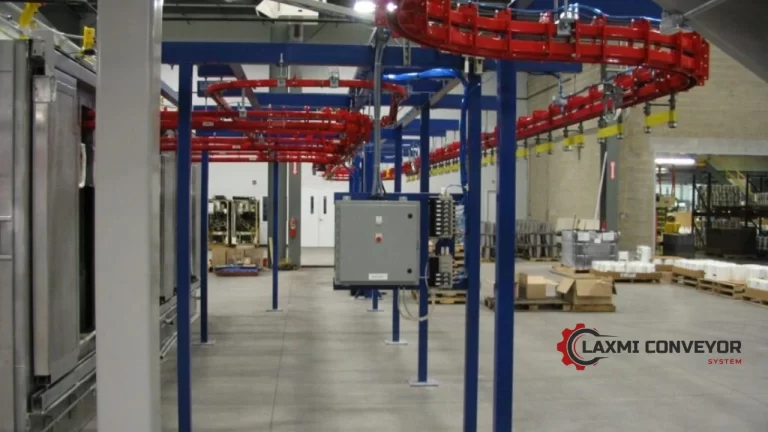
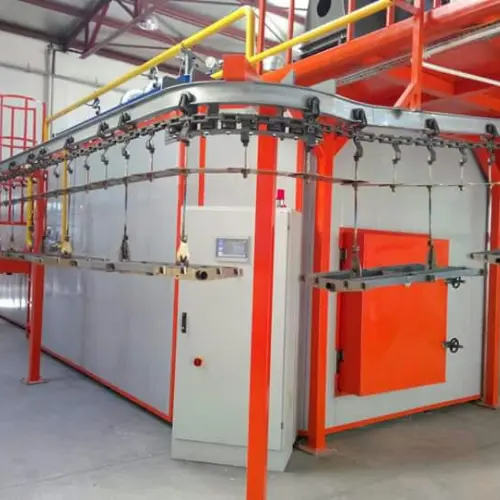
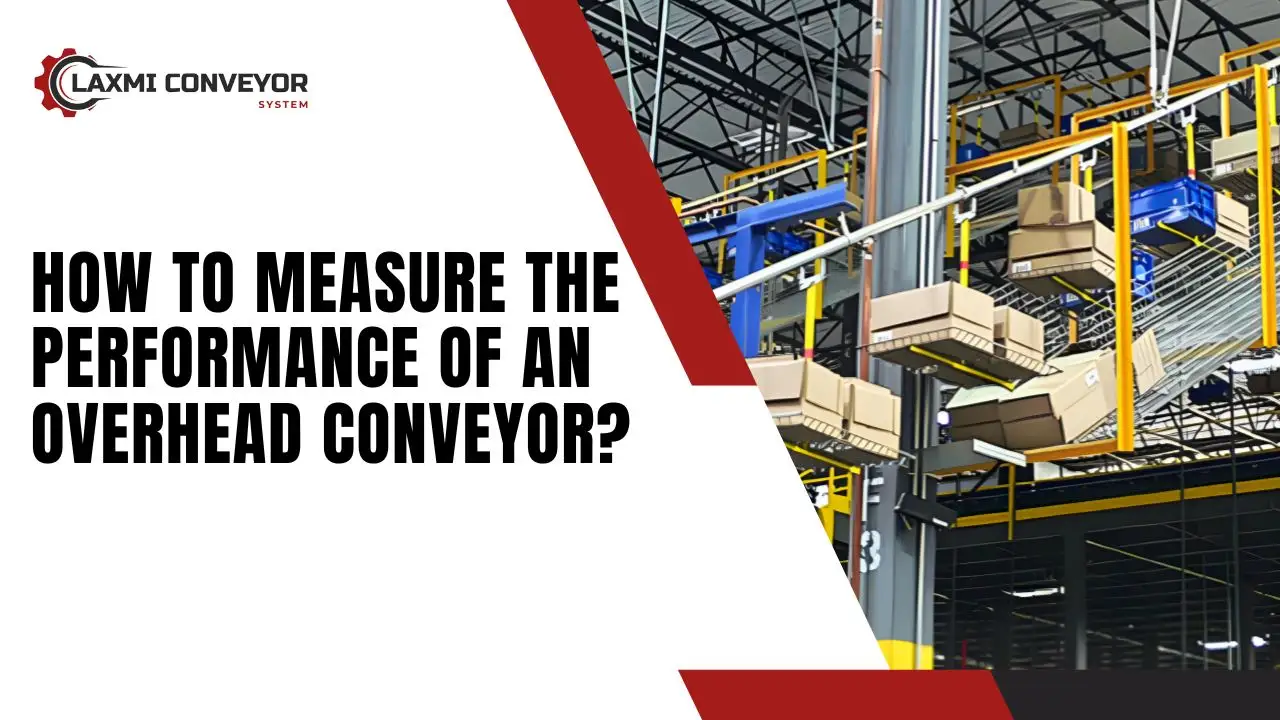
The performance of an overhead conveyor refers to how efficiently it transports materials from one point to another while maintaining safety, speed, and consistency. A well-performing system minimizes downtime, handles the required load smoothly, and integrates seamlessly with production operations. Laxmi Conveyor design systems that provide high productivity while keeping maintenance and operating costs under control.
Overhead Conveyor Design
- Efficient Material Flow: Proper overhead conveyor design ensures smooth and continuous movement of materials, reducing bottlenecks in the production process and improving overall workflow.
- Accurate Load Handling: Well-planned overhead conveyor design calculations help the system handle the required load safely, preventing overloading and uneven weight distribution.
- Optimized Space Utilization: Overhead conveyors are designed to use vertical space effectively, keeping floor areas free for other operations and improving plant layout efficiency.
- Improved System Reliability: A strong design minimizes mechanical stress on components, resulting in fewer breakdowns and longer equipment life.
- Energy Efficiency: Thoughtful design reduces friction and power loss, allowing the conveyor to operate efficiently while consuming less energy.
Also Read : 10 Types of Commonly Used Conveyors in Industry
At Laxmi Conveyor, we understand that performance evaluation is key to long-term success. That’s why we provide solutions that are not only efficient but also easy to monitor and optimize.
1. Throughput and Capacity
One of the primary ways to measure the performance of an overhead conveyor system is by analyzing its throughput. This refers to the number of items the system can transport within a specific time frame. Monitoring capacity utilization also helps determine whether your overhead conveyor is underused or overloaded, allowing you to make necessary adjustments.
2. Speed and Cycle Time
The speed of an overhead conveyor system directly impacts productivity. Measuring how quickly items move from one point to another—known as cycle time—helps identify bottlenecks in the process.
3. Downtime and Reliability
Frequent breakdowns or unexpected stops can significantly affect performance. Tracking downtime is essential to evaluate the reliability of your overhead conveyor. A high-performing system should have minimal interruptions. By analyzing downtime patterns, businesses can schedule preventive maintenance and avoid costly disruptions.
4. Energy Efficiency
Energy consumption is another critical factor when measuring the performance of an overhead conveyor system. Comparing energy usage against output levels helps determine whether your overhead conveyor is operating efficiently or wasting resources. Laxmi Conveyor focuses on designing systems that balance performance with energy savings.
5. Load Handling Efficiency
Every overhead conveyor system is designed to handle specific load capacities. Measuring how effectively the system manages different types of loads—light, medium, or heavy—is essential. A well-balanced overhead conveyor ensures smooth handling without compromising performance.
6. Maintenance and Wear Analysis
Regular inspection of components such as chains, tracks, and motors helps in assessing the overall health of the system. Laxmi Conveyor provides support services that help clients maintain peak performance.
7. Safety Performance
An efficient overhead conveyor should operate smoothly without causing hazards to workers. Monitoring incidents, near-misses, and compliance with safety standards ensures that the system is not only productive but also safe to use.
8. Flexibility and Adaptability
Modern industries require systems that can adapt to changing needs. Evaluating how easily your overhead conveyor system can handle different products or workflow changes is important. A flexible system improves overall efficiency and reduces the need for frequent modifications. Laxmi Conveyor offers customizable solutions that adapt to evolving business requirements.
How can overhead conveyor performance be improved?
Overhead conveyors are widely used in automotive plants, food processing units, warehouses, pharmaceutical industries, and manufacturing facilities. Their ability to handle continuous loads while saving floor space makes them suitable for high-volume operations. Performance can be improved by regular maintenance, proper lubrication, correct loading practices, and using accurate overhead conveyor design calculations. Monitoring speed, load stability, and downtime also helps in identifying issues early and maintaining system efficiency.
Measuring the performance of an overhead conveyor involves more than just checking whether it moves materials. It requires a detailed evaluation of load capacity, speed, reliability, energy efficiency, safety, and adaptability. From ensuring the mass capacity of a conveyor is 200 ton/hr to validating accurate overhead conveyor design calculations, every factor contributes to overall efficiency.
Laxmi Conveyor continues to design systems that provide consistent performance, long service life, and operational reliability. By regularly measuring and analyzing conveyor performance, businesses can maximize productivity, reduce downtime, and achieve smoother material handling operations.