In modern industries efficiency, space optimization, and automation are first priorities, overhead conveyors are a solution for this. This has become a reliable and space-saving solution for material handling. In industries like garment units, automobile assembly lines, or paint shops, these conveyors offer a seamless way to transport products above the floor level, freeing up workspace and enhancing workflow. But it is important to know how overhead conveyors actually work? In this blog, we are given a guide to explore Overhead Conveyor working principle.
What is Overhead Conveyor?
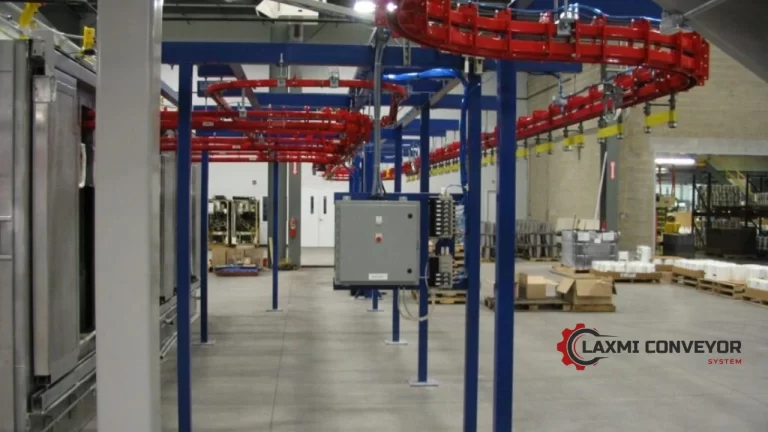
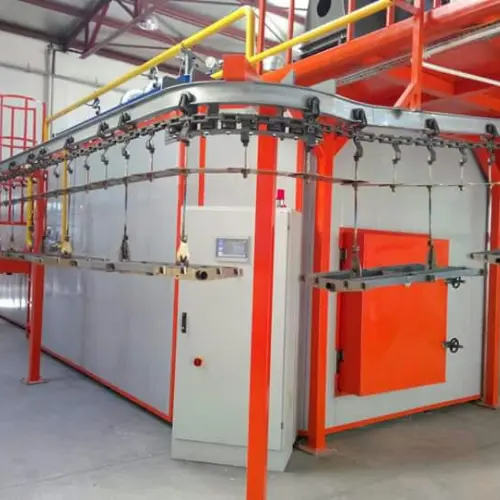
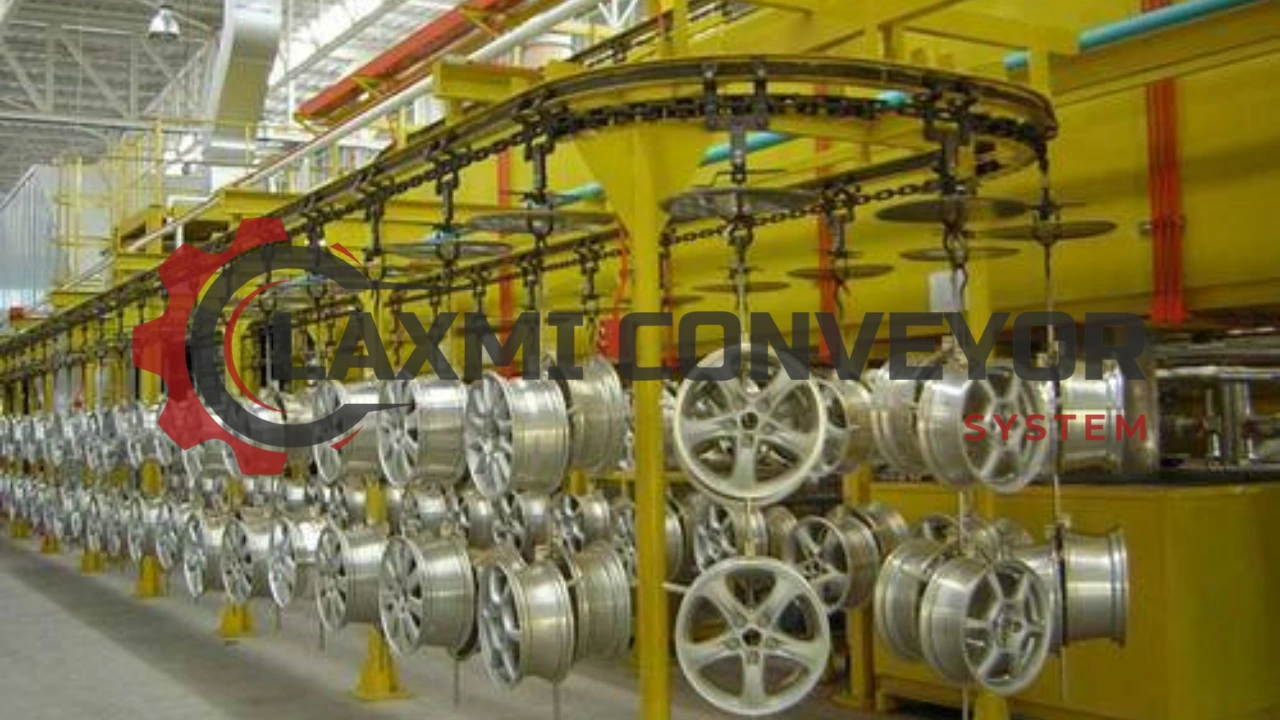
An overhead conveyor is a type of conveyor system that transports materials or products along an overhead track. The items are typically suspended from trolleys, hooks, or carriers attached to a continuous chain or cable. These systems can operate manually, semi-automatically, or fully automatically, depending on the level of control and complexity required. Laxmi Conveyor is a leading overhead conveyor manufacturer, offering quality based material handling equipment. Overhead conveyors are available in manual, semi-automatic, and fully automatic configurations, offering flexibility for various applications. They support continuous movement, improve safety by keeping materials off the ground, and reduce manual labor.
Benefits of Overhead conveyor
- Maximizes Floor Space Utilization: By transporting materials overhead, these conveyors free up valuable floor space for other operations such as assembly, packaging, or foot traffic. This results in a more organized and efficient workspace.
- Improves Workflow Efficiency: Overhead conveyors provide a continuous flow of materials across various production or processing stations, reducing manual handling and speeding up production lines.
- Flexible Layouts and Routing: These systems can be designed to move around curves, inclines, and declines. This makes them suitable for complex layouts where traditional floor conveyors are not feasible.
- Reduces Manual Labor and Fatigue: Automating the movement of materials eliminates the need for workers to carry heavy or awkward loads, reducing physical strain and improving worker safety.
- Ideal for Dirty or Hazardous Materials: Transporting items overhead keeps them away from workers and sensitive equipment, making it safer for handling hazardous, hot, or painted parts.
- Supports Automation and Integration: Overhead conveyors can be integrated with robotic arms, sensors, and PLC systems for automated operation and real-time process control.
- Enhances Safety and Reduces Clutter: Keeping products and parts off the floor reduces the risk of tripping hazards and makes the workplace safer and more organized.
- Low Maintenance and Long Service Life: Designed with durability in mind, overhead conveyors require minimal maintenance and can run continuously with minimal downtime.
- Customizable for Different Applications: These systems can be tailored with various hooks, fixtures, or carriers to suit different load types, shapes, and weights.
- Cost-Effective for Long-Term Use: Though the initial setup might be higher, the long-term savings from labor reduction, increased productivity, and space optimization make it a cost-effective solution.
Working Principles of Overhead Conveyor
- Suspended Track System: The conveyor operates on a steel or aluminum track mounted overhead, creating a predefined path along which materials are transported. This overhead design helps in efficient space utilization.
- Continuous Chain or Cable Movement: A continuous loop of chain or cable runs along the track. This chain is powered by a drive unit (motor) that initiates and controls its movement across the system.
- Trolley or Carrier Support: Materials are carried by trolleys, hooks, or custom carriers that are attached to the moving chain. These trolleys move smoothly along the track, suspending the load safely.
- Motorized Drive Mechanism: An electric motor, usually located at one end of the system, powers the entire chain drive. The motor ensures a consistent speed and movement of materials across all stations.
- Gravity or Power Return: In some systems, return movement of the empty carriers is done through gravity; in others, the return path is also motorized depending on the weight and layout.
- Modular Routing: The track can be configured to handle horizontal paths, curves, inclines, and declines, allowing complex layouts and multilevel transport in confined areas.
- Start/Stop or Automated Control: Systems can be manually controlled or fully automated using sensors, timers, and PLCs (Programmable Logic Controllers), making them ideal for integration into smart factories.
- Load and Unload Stations: Specific stations are designated along the track for loading and unloading items. These can be manually operated or fully automated, depending on the application.
- Consistent Material Flow: The continuous loop and steady movement allow for a non-stop, consistent flow of materials, which is essential for assembly lines, paint booths, or packaging lines.
- Versatility in Applications: The overhead conveyor’s design supports a wide variety of items—from garments and automotive parts to cartons and paint-coated products—making it suitable for diverse industries.
Overhead conveyors make an impactful impression on industrial heavy load applications with their flexibility, efficiency, and space-saving design, they play a critical role in modern industrial environments. Overhead conveyor working principle is built on a simple but effective mechanical system, its helps to understand the processing of conveyor lines.