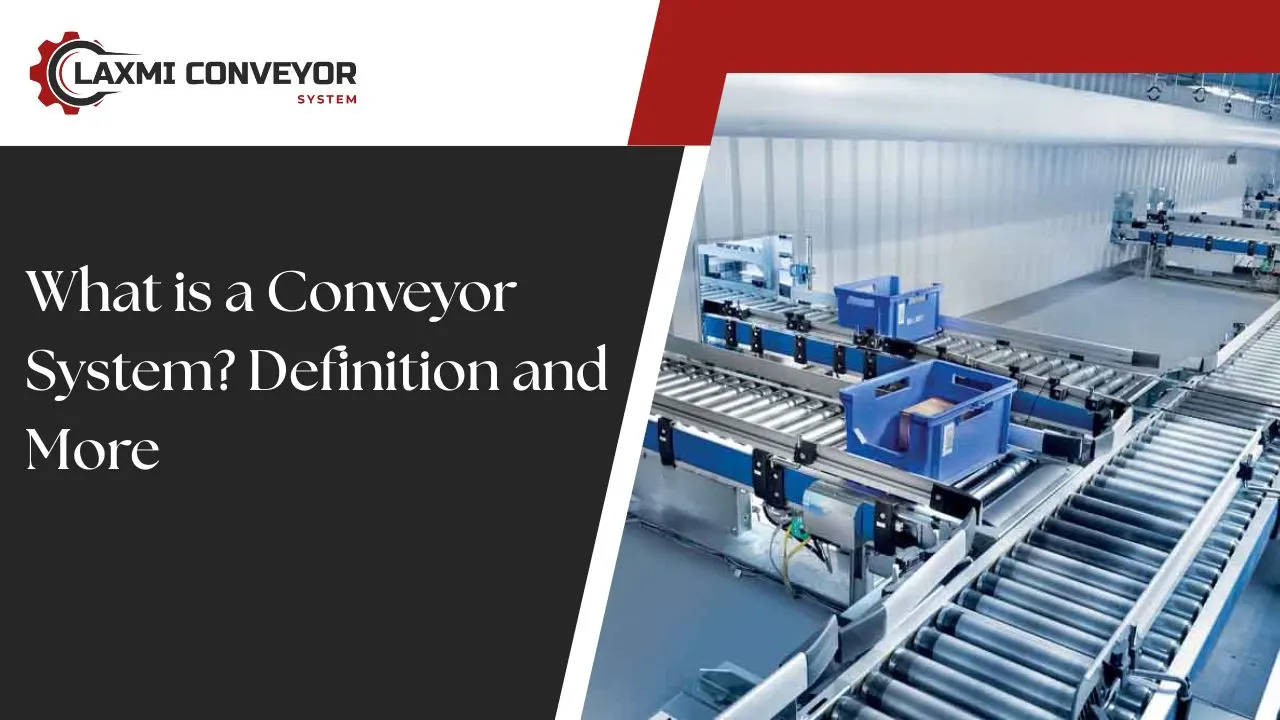
In today’s fast-moving industrial world, efficiency and smooth material handling are everything. Whether it’s a manufacturing plant, warehouse, or assembly line, moving materials quickly and safely can make or break productivity. This is where the conveyor system plays a vital role. From simple belt setups to advanced automated lines, conveyors have become the backbone of modern operations. Laxmi Conveyor understands these needs and offers customized conveyor solutions that align with specific operational requirements.
Conveyor Definition: What Is a Conveyor System?
A conveyor system can be defined as a mechanical handling system designed to transport materials, products, or components from one location to another with minimal manual effort. In simple terms, a conveyor is used to move items continuously and efficiently across short or long distances.
The basic conveyor consists of components such as belts, rollers, chains, motors, and frames. Depending on the application, the system can be customized to handle light packages, heavy loads, or delicate products.
How a Conveyor System Works
- Power Source Activation: The conveyor system is driven by an electric motor or drive unit that provides the necessary power to move the conveyor.
- Movement of Conveyor Component: Depending on the design, a belt, roller, or chain begins to move, carrying materials smoothly along the conveyor path.
- Material Loading: Products or materials are placed onto the conveyor manually or automatically at the loading point.
- Controlled Transportation: The conveyor moves items at a consistent speed, ensuring safe and efficient material handling throughout the process.
- Guided Direction Flow: Frames, guides, and supports keep materials aligned and prevent spillage during movement.
- Discharge at Destination: Materials are unloaded at the end point or transferred to another conveyor or machine.
- Automation and Sensors: Advanced conveyor systems use sensors and controls to manage speed, detect jams, and improve overall efficiency.
Role of Overhead Conveyor in Modern Industries
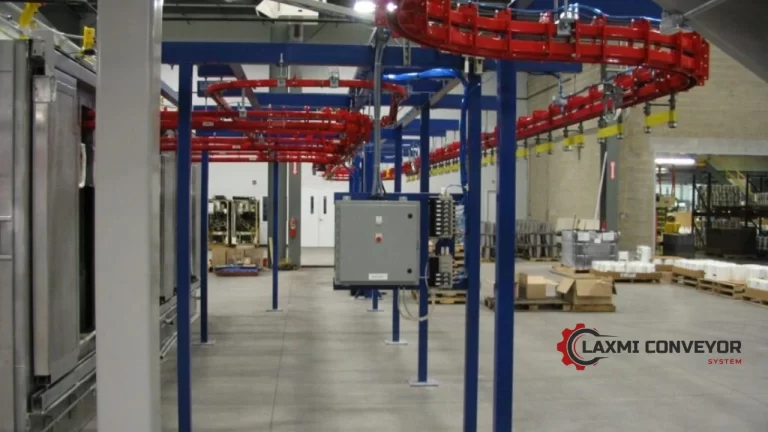
The overhead conveyor has become increasingly popular due to its space-saving design. By transporting materials above workstations, it keeps the floor clear for equipment and personnel movement.
Overhead conveyors are commonly used for:
- Paint and coating lines
- Automotive assembly
- Material drying processes
- Continuous production environments
Laxmi Conveyor specializes in designing systems that offer efficient overhead conveyor solutions tailored to complex industrial layouts.
Also Read : How to measure the performance of an overhead conveyor?
Types of Conveyor Systems
There are several types of conveyor systems, each designed for specific tasks:
1. Belt Conveyor
Used for transporting lightweight to medium-weight materials, belt conveyors are common in warehouses and packaging lines.
2. Roller Conveyor
Ideal for handling cartons and pallets, roller conveyors work well in distribution centers.
3. Chain Conveyor
Used in heavy-duty applications where strong and durable material handling is required.
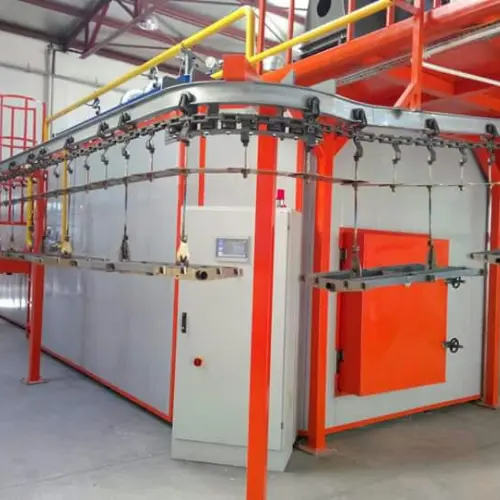
4. Overhead Conveyor
An overhead conveyor moves products above the floor level, freeing up valuable space. It is widely used in automotive plants, paint shops, and assembly lines.
Applications of Conveyor Systems
A well-designed conveyor system is used across a wide range of industries:
- Manufacturing and assembly plants
- Warehousing and logistics
- Food and beverage processing
- Automotive and engineering industries
- Packaging and material handling units
No matter the industry, conveyors help streamline operations and maintain consistent output.
Choosing the Right Conveyor System
Selecting the right conveyor involves understanding load capacity, product type, speed requirements, and available space. Factors such as durability, maintenance needs, and future expansion should also be considered. Partnering with an experienced manufacturer like Laxmi Conveyor makes the process easier. We provide expert guidance, custom designs, and reliable installation services to ensure long-term performance.
A well-designed conveyor system is a vital asset for any industry aiming to improve efficiency, safety, and productivity. By choosing the right system and ensuring proper design and maintenance, businesses can achieve long-term operational success. Trusted manufacturers like Laxmi Conveyor understand these needs and offer reliable, customized conveyor solutions that help industries move smarter, faster, and more efficiently.