Laxmi Conveyor plays a vital role in helping industries move materials smoothly, safely, and efficiently. In modern manufacturing, warehousing, and logistics, the movement of raw materials and finished goods is just as important as production itself. We provide material handling conveyor solutions that are designed to integrate seamlessly into existing operations. By automating material movement, companies can focus more on quality control, production planning, and customer satisfaction.
A material handling conveyor is a mechanical system designed to transport materials from one point to another within a facility. Instead of relying on manual lifting or carrying, conveyors automate the movement of goods, saving time and reducing physical strain on workers. These systems are commonly used in factories, warehouses, distribution centers, airports, and processing plants.
Also Read : Overhead Conveyors Manufacturer
How Material Handling Conveyor Systems Work
A material handling conveyor system works by using motors, rollers, belts, or chains to move materials along a predefined path. These systems can be customized to include sensors, speed controls, and automation features that ensure smooth operation.
As reliable manufacturers, Laxmi Conveyor provides systems that are engineered for durability and efficiency. Our designs ensure minimal downtime, easy maintenance, and consistent performance even under continuous operation.
Types of Material Handling System
There are several types of conveyors used in material handling, this work according to specific need of various operation, their
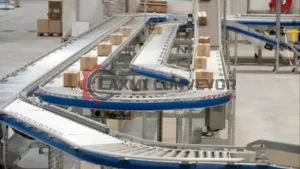
- Belt Conveyors: These are the most common type and consist of a continuous belt made of rubber, fabric, or metal. Belt conveyors are ideal for transporting bulk materials or small to medium-sized items over both short and long distances.
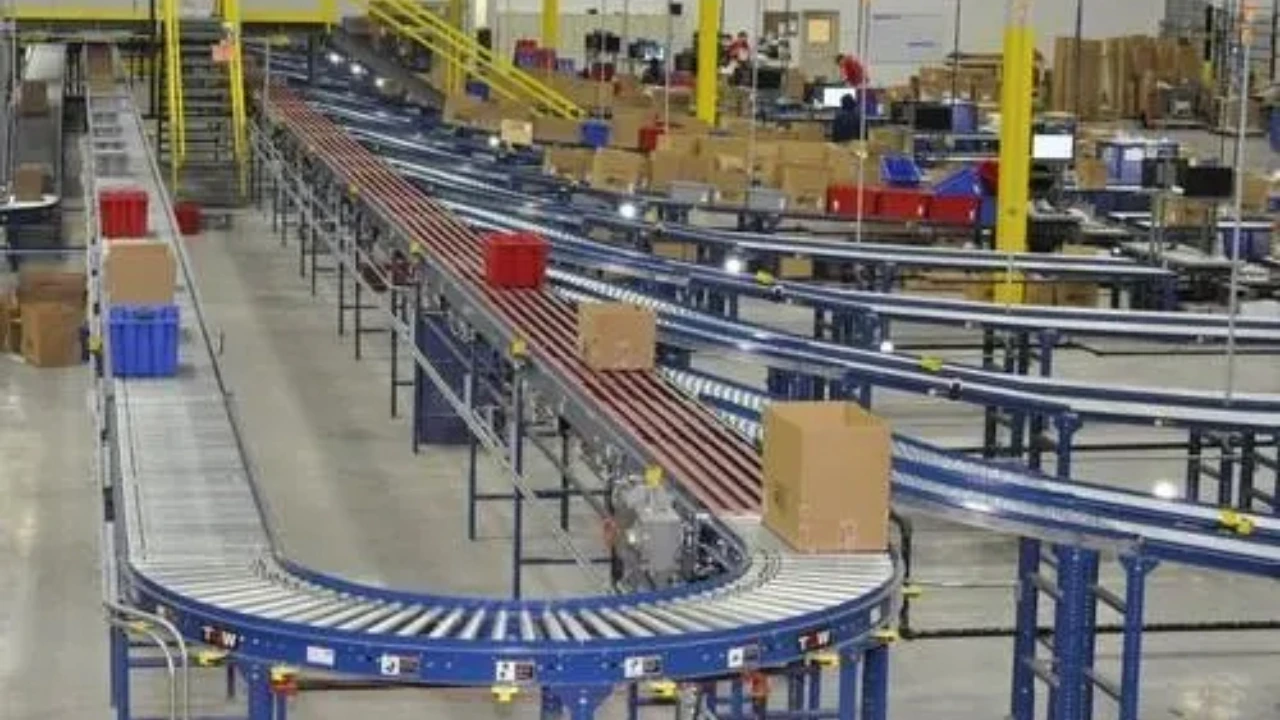
- Roller Conveyors: These use a series of rollers to move items. Gravity roller conveyors rely on a downward slope and gravity, while powered roller conveyors use motors. They are often used for handling packages and pallets.
- Chain Conveyors: These are used to transport heavy loads, such as industrial containers or metal components, often in automotive and heavy manufacturing industries.
- Screw Conveyors: Also known as auger conveyors, these use a helical screw blade to move granular or semi-solid materials. They are commonly used in food processing, agriculture, and chemical industries.
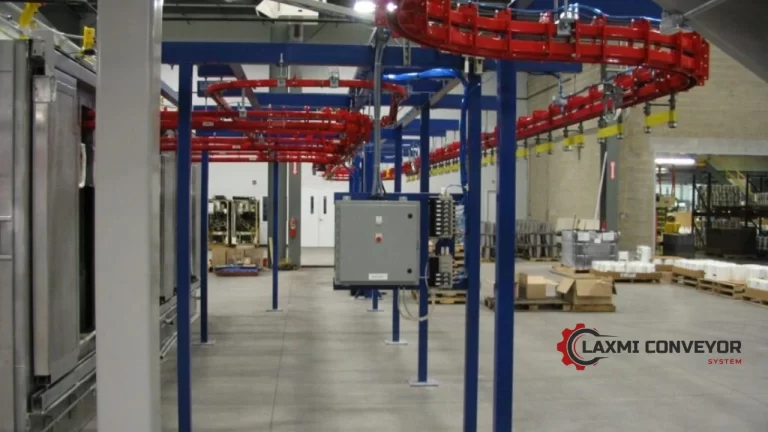
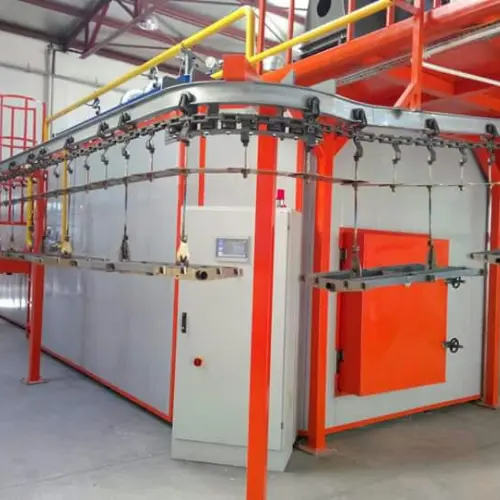
- Overhead Conveyors: These systems carry items above ground level, freeing up floor space. They are used in painting lines, garment handling, and automotive assembly.
- Pneumatic and Vacuum Conveyors: These use air pressure or vacuum systems to move materials through enclosed tubes, making them ideal for fine powders or small granular items.
Applications of Conveyor Material Handling Equipment
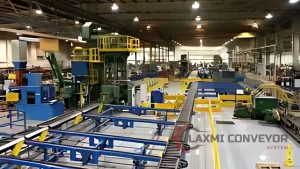
- Manufacturing Industries: Used to transfer raw materials, semi-finished, and finished products between production stages.
- Warehousing and Distribution Centers: Helps in sorting, packing, and moving goods efficiently for faster order fulfillment.
- Food and Beverage Processing: Ensures hygienic and continuous movement of food products during processing and packaging.
- Pharmaceutical Industry: Supports safe and controlled handling of medicines, tablets, and packaged products.
- Mining and Cement Plants: Handles heavy-duty transportation of bulk materials like coal, limestone, and clinker.
Benefits of Using Material Handling Equipment Conveyor
- Increased Operational Efficiency: A material handling equipment conveyor ensures smooth and continuous movement of goods, reducing delays and improving overall workflow.
- Reduced Manual Labor: Using conveyors minimizes the need for manual lifting and carrying, lowering labor costs and physical strain on workers.
- Improved Workplace Safety: Conveyors help reduce workplace accidents by limiting direct human interaction with heavy or hazardous materials.
- Consistent Material Flow: A material handling equipment conveyor maintains uniform movement of materials, ensuring stable production and packaging processes.
- Faster Production and Output: Automated material handling speeds up operations and helps meet tight production schedules efficiently.
- Reduced Product Damage: Controlled and steady transportation lowers the risk of material spillage or product damage.
- Space Optimization: Conveyors can be designed to move materials vertically or horizontally, making better use of available floor space.
Why Choose Laxmi Conveyor?
Choosing the right manufacturer is as important as choosing the right conveyor. Laxmi Conveyor offer complete material handling solutions backed by technical expertise and industry experience. Our commitment to quality, performance, and customer satisfaction makes them a trusted name in the field. From design and manufacturing to installation support, Laxmi Conveyor ensures that clients receive reliable and efficient material handling equipment conveyor solutions that add real value to their operations.
From improving productivity to enhancing safety, material handling conveyors play a crucial role across industries. With advanced material handling conveyor systems, businesses can streamline workflows and achieve consistent operational efficiency. Laxmi Conveyor offers high-quality, customized, and reliable conveyor solutions designed to meet diverse industrial needs. By investing in the right conveyor material handling equipment, companies can ensure smoother operations, lower costs, and long-term success.