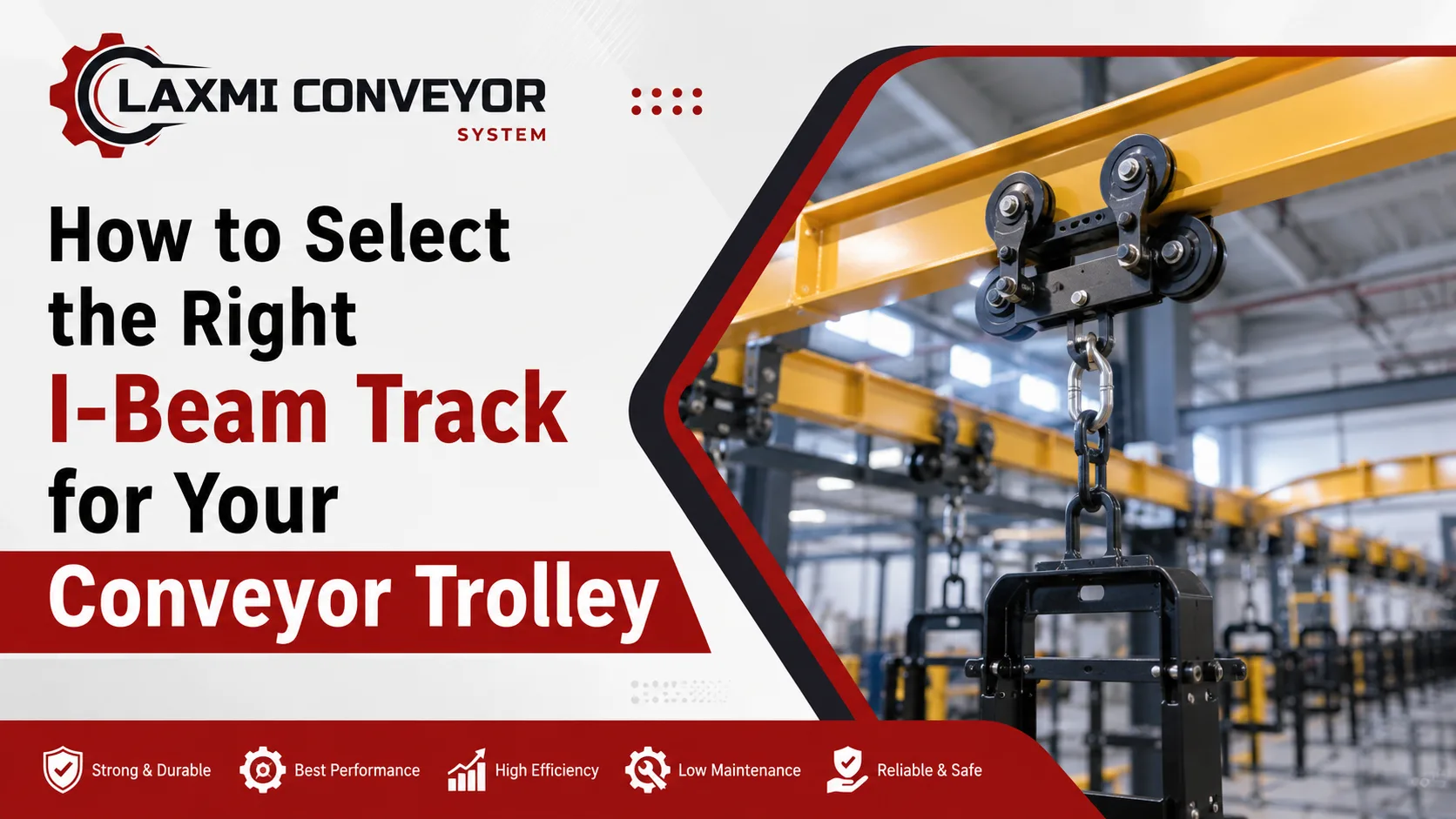
Selecting the right I-Beam Track is one of the most important decisions when designing an overhead material handling system. The track acts as the supporting path for the conveyor trolley and directly affects load capacity, movement, safety, durability, and overall system performance. Whether you are setting up a new production line or upgrading an existing material handling system, choosing the correct i beam conveyor track can help improve efficiency and reduce maintenance requirements.
Laxmi Conveyor designs and develops reliable conveyor solutions and can offer suitable I-Beam Track options based on the specific requirements of different industries. Industries such as automotive, manufacturing, powder coating, assembly, fabrication, warehousing, and material handling are widely used in beam conveyor systems for moving products from one workstation to another. However, every application has different requirements. The size of the load, distance to be covered, available space, operating environment, and production speed should all be considered before selecting the track.
Understand Your Load Requirements
The first factor to consider while selecting an I-Beam Track is the weight of the material or product that the trolley needs to carry. The track must have enough strength to safely support the combined weight of the trolley, hooks, fixtures, components, and products.
It is important to consider both the normal working load and possible additional loads. A track that is too small may bend or experience excessive wear, while an unnecessarily large track can increase the overall cost of the system.
Before selecting an i beam conveyor, calculate:
- Weight of the product
- Weight of the trolley
- Weight of fixtures or carriers
- Maximum expected load
- Safety factor requirements
A properly selected I-Beam Track helps ensure smooth and safe trolley movement even during continuous industrial operation.
Types of Conveyor Trolley
A conveyor trolley is an important component of an overhead material handling system. It moves along the track and carries products, materials, or specially designed fixtures from one point to another. Below are the major types commonly used with i beam conveyor systems.
Single Wheel Conveyor Trolley
A single wheel conveyor trolley is designed with one primary wheel that moves along the conveyor track. It is generally used for lighter-duty material handling applications where simple and flexible movement is required.
Two-Wheel Conveyor Trolley
A two-wheel conveyor trolley uses two wheels to provide better stability and smoother movement along the track. It can distribute the load more effectively than a single-wheel design and is commonly used in many overhead conveyor applications.
Four-Wheel Conveyor Trolley
A four-wheel conveyor trolley is designed for applications requiring greater stability and improved load distribution.These trolleys are often used in i beam conveyor applications where consistent movement and reliable load support are important.
Load Carrying Conveyor Trolley
A load carrying trolley is specially designed to support products, materials, or fixtures during movement. The trolley can be customized based on the weight, dimensions, and shape of the product.
Pendant Conveyor Trolley
A pendant conveyor trolley carries the product below the main conveyor track through a hanging connection. This arrangement is widely used for overhead material handling, assembly lines, paint shops, and production systems where products need to move through different processing stages.
Chain-Driven Conveyor Trolley
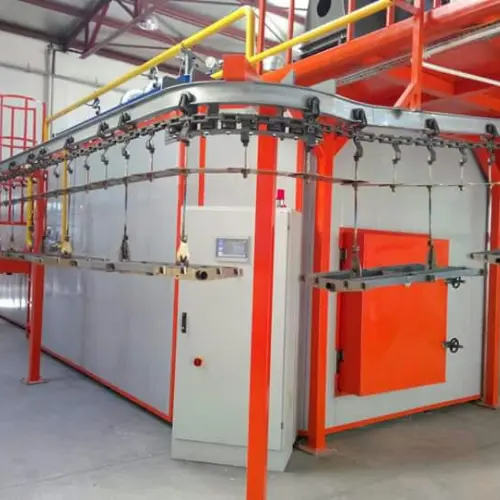
A chain-driven trolley is connected to a continuously moving chain that pulls it along the track. This type of trolley is suitable for automated and continuous i beam conveyor systems. It can help maintain a controlled movement pattern and is commonly used in industrial production lines.
Free Conveyor Trolley
A free conveyor trolley is designed to move independently or stop at different stations when required. It can be useful in systems where products need to spend different amounts of time at assembly, inspection, processing, or loading points.
Heavy-Duty Conveyor Trolley
Heavy-duty conveyor trolleys are built for handling larger and heavier loads. They are manufactured using strong materials and are designed to operate with suitable i beam conveyor tracks. Proper selection of wheel size, trolley construction, and track capacity is essential for safe operation.
Evaluate the Conveyor Route and Layout
Some industrial plants require a simple straight conveyor route, while others need a complex path with turns, curves, elevation changes, loading stations, and unloading points. The I-Beam Track should be selected according to the required conveyor layout. For example, curved sections need properly designed bends so that the trolley can move smoothly without jamming or excessive friction.
Before finalizing the track, consider:
- Total conveyor length
- Straight sections
- Curves and bends
- Height of the conveyor
- Available ceiling space
- Loading and unloading locations
- Expansion plans
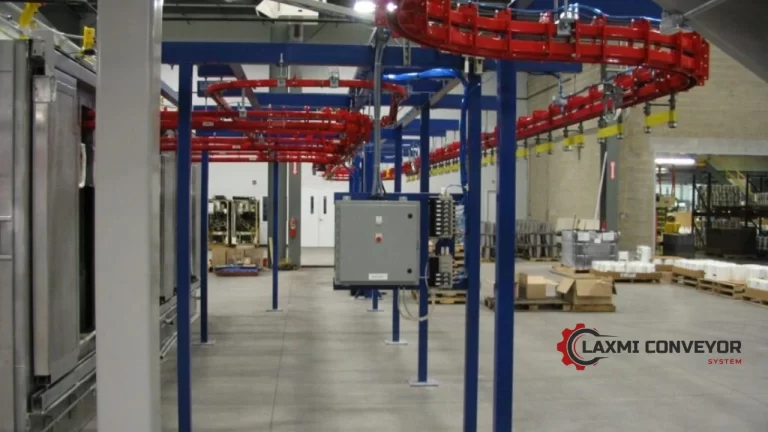
A well-planned i beam conveyor layout makes better use of available floor space. Since overhead conveyor systems utilize the upper area of a facility, they can keep production floors more open and organized.
Check the Required Production Speed
The speed of the conveyor system is another important factor. Slow-moving systems used for assembly or hanging applications may have different track requirements compared with continuously moving production conveyors.
Higher production speeds can create additional dynamic forces. Therefore, the strength and alignment of the I-Beam Track become even more important. The support structure should also be capable of handling continuous movement and vibration. For fast and continuous i beam conveyor systems, proper engineering helps ensure stable trolley movement and long service life. Selecting the right track for the required speed can also reduce noise and minimize unnecessary wear on moving components.
Focus on Track Support and Installation
The best I-Beam Track cannot perform efficiently without proper support and installation. The beam must be correctly aligned and securely supported throughout the conveyor route. Support spacing depends on the beam size, load, and system design. Incorrect support can cause sagging, misalignment, or vibration. This may affect trolley movement and increase wear on wheels and other components. Laxmi Conveyor can offer guidance on selecting suitable support arrangements for different i beam conveyor systems and applications.
Choosing the right I-Beam Track for your conveyor trolley requires careful consideration of load capacity, trolley compatibility, conveyor layout, production speed, operating conditions, installation, safety, and future expansion. The correct track selection improves system performance and helps create a safer and more efficient material handling process.
A well-designed i beam conveyor can support smooth product movement while reducing the need for valuable floor space. With proper planning and professional guidance, businesses can select a reliable track system that meets their present and future operational needs. Laxmi Conveyor can offer dependable solutions for businesses looking to build efficient and durable i beam conveyor systems.