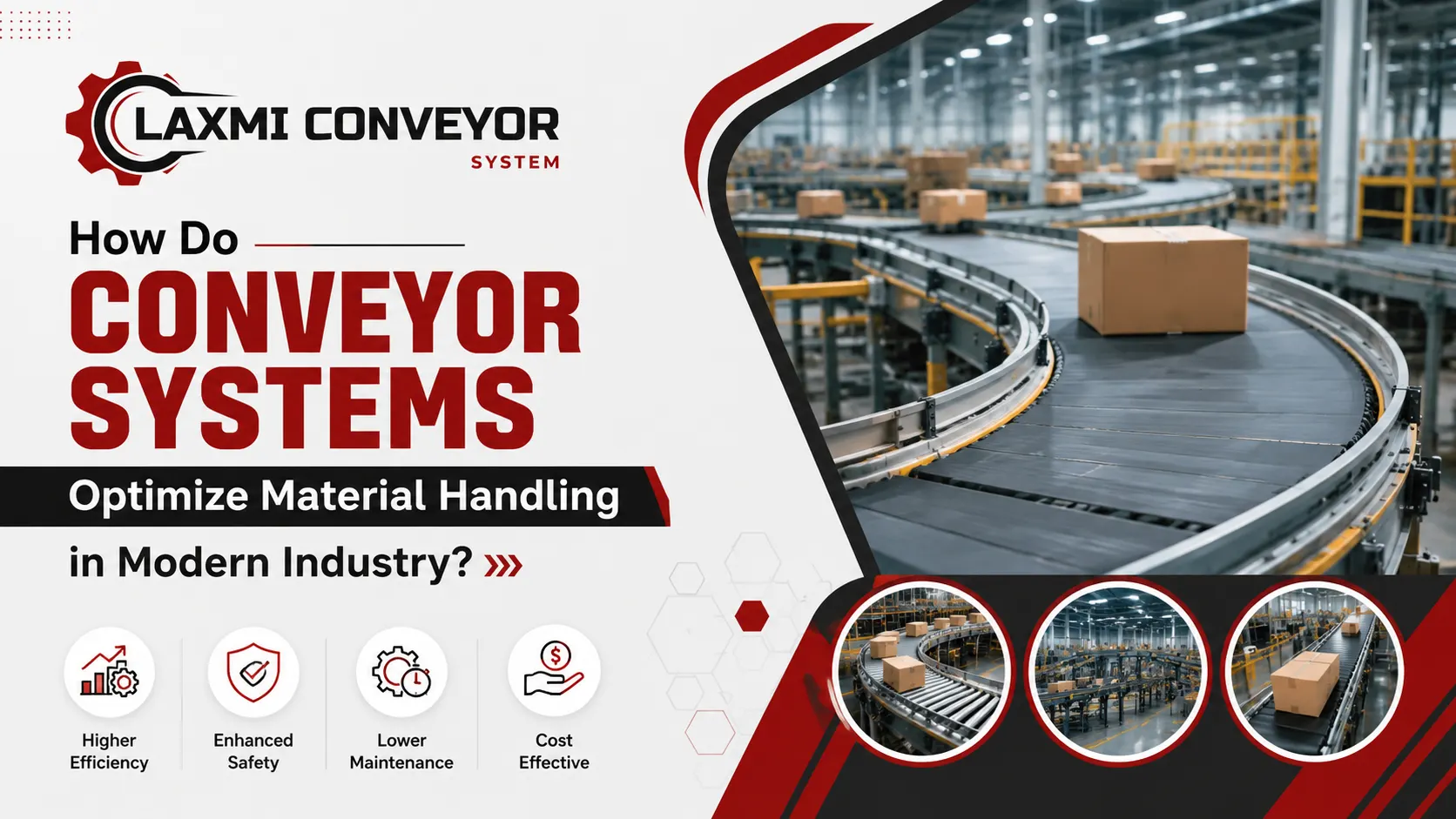
Material handling conveyors have become the backbone of modern industries because they provide a reliable, cost-effective, and efficient way to transport products, raw materials, and finished goods. At Laxmi Conveyor, we understand the growing demand for advanced conveyor solutions and provide customized systems designed to improve operational performance across various industries. From manufacturing plants and warehouses to food processing facilities and logistics centers, conveyor systems play a vital role in optimizing material movement.
What is a Material Handling Conveyor?
A Material Handling Conveyor is a mechanical system used to transport goods, products, or raw materials from one point to another inside an industrial facility. These systems are designed to reduce manual labor, improve speed, and ensure smooth movement of materials during production and storage operations.
By automating transportation tasks, conveyor systems help businesses improve efficiency while reducing operational challenges.
Types of Material Handling Conveyors
Different industries require different conveyor solutions based on the products being transported and operational requirements.
Belt Conveyors
Belt conveyors are among the most commonly used material handling conveyors. They are ideal for transporting packaged goods, bulk materials, and finished products over long distances.
Roller Conveyors
Roller conveyors are widely used in warehouses, assembly lines, and distribution centers. They provide smooth movement for cartons, boxes, and heavy materials.
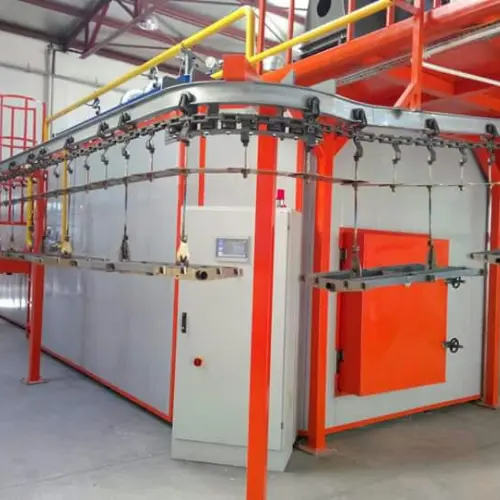
Chain Conveyors
Chain conveyors are designed for handling heavy-duty loads and are commonly used in automotive, manufacturing, and industrial applications.
Screw Conveyors
Screw conveyors are particularly effective for transporting powders, grains, chemicals, and bulk materials.
Slat Conveyors
Slat conveyors offer durability and are frequently used in assembly operations and heavy manufacturing environments.
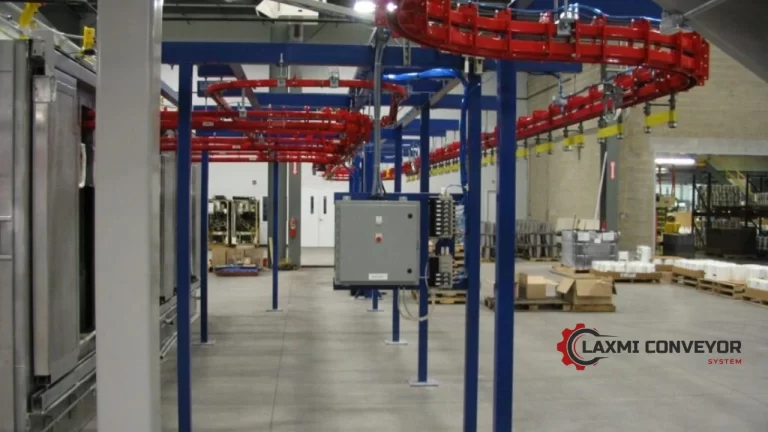
Overhead Conveyors
Overhead conveyor systems help maximize floor space while efficiently transporting products through production processes.
At Laxmi Conveyor, we provide customized conveyor solutions designed to meet the unique requirements of various industrial sectors.iciency.
Also Read : The Future of Material Handling: Turning Conveyors into Smart Systems
How Conveyor Systems Optimize Material Handling
Modern conveyor systems are designed to do much more than simply move products. Advanced conveyor technology helps industries optimize the entire material handling process.
- Streamlined Workflow: One of the biggest advantages of a material handling conveyor is workflow optimization. Conveyor systems ensure continuous movement of materials between departments without delays.
- Automation and Smart Control: Modern conveyor systems can be integrated with automation technology, sensors, and control systems.
- Efficient Space Utilization: Industrial spaces are valuable, especially in warehouses and manufacturing units.Conveyor systems help optimize floor space by organizing material movement systematically.
- Reduced Product Damage: Manual handling often increases the chances of product breakage and material damage. Conveyor systems transport products smoothly and safely, reducing losses during operations.
- Faster Loading and Unloading: Warehouses and logistics centers use conveyor systems to speed up loading and unloading processes.
Industries That Benefit from Conveyor Systems
The versatility of material handling conveyors makes them suitable for numerous industries.
- Manufacturing Industry: Manufacturing plants use conveyor systems to move raw materials, components, and finished products throughout production facilities.
- Food Processing Industry: Food manufacturers rely on conveyor systems to maintain hygiene standards while ensuring efficient product movement.
- Automotive Industry: Automotive companies use conveyor systems for assembly lines, component handling, and vehicle manufacturing processes.
- Pharmaceutical Industry: Pharmaceutical facilities require precision material handling systems that ensure product integrity and regulatory compliance.
- Warehousing and Logistics: Warehouses and distribution centers depend heavily on material handling conveyors to manage inventory movement efficiently.
- Packaging Industry: Packaging facilities use conveyor systems to streamline product handling, sorting, labeling, and packaging operations.
Future of Material Handling Conveyor Systems
As industries continue to adopt automation and smart technologies, conveyor systems are becoming more advanced and intelligent. Modern systems are now integrated with:
- Artificial intelligence
- IoT technology
- Smart sensors
- Real-time monitoring systems
- Automated sorting solutions
Industries investing in advanced conveyor systems today are preparing themselves for long-term growth and efficiency.
Why Choose Laxmi Conveyor?
At Laxmi Conveyor, we specialize in designing and manufacturing high-quality conveyor solutions tailored to the evolving needs of modern industries. Our expertise, advanced technology, and commitment to quality enable us to provide reliable, durable, and efficient material handling conveyors for a wide range of applications.
We focus on delivering customized solutions that help businesses improve productivity, reduce costs, and enhance operational performance.
Conveyor systems have become an indispensable part of modern industrial operations. By improving efficiency, reducing labor costs, enhancing safety, and optimizing workflows, material handling conveyors play a critical role in supporting industrial growth and productivity.
As industries continue to embrace automation and advanced manufacturing technologies, the demand for efficient conveyor systems will continue to increase. With innovative solutions from Laxmi Conveyor, businesses can achieve superior material handling performance, maximize operational efficiency, and remain competitive in today’s rapidly evolving industrial landscape.