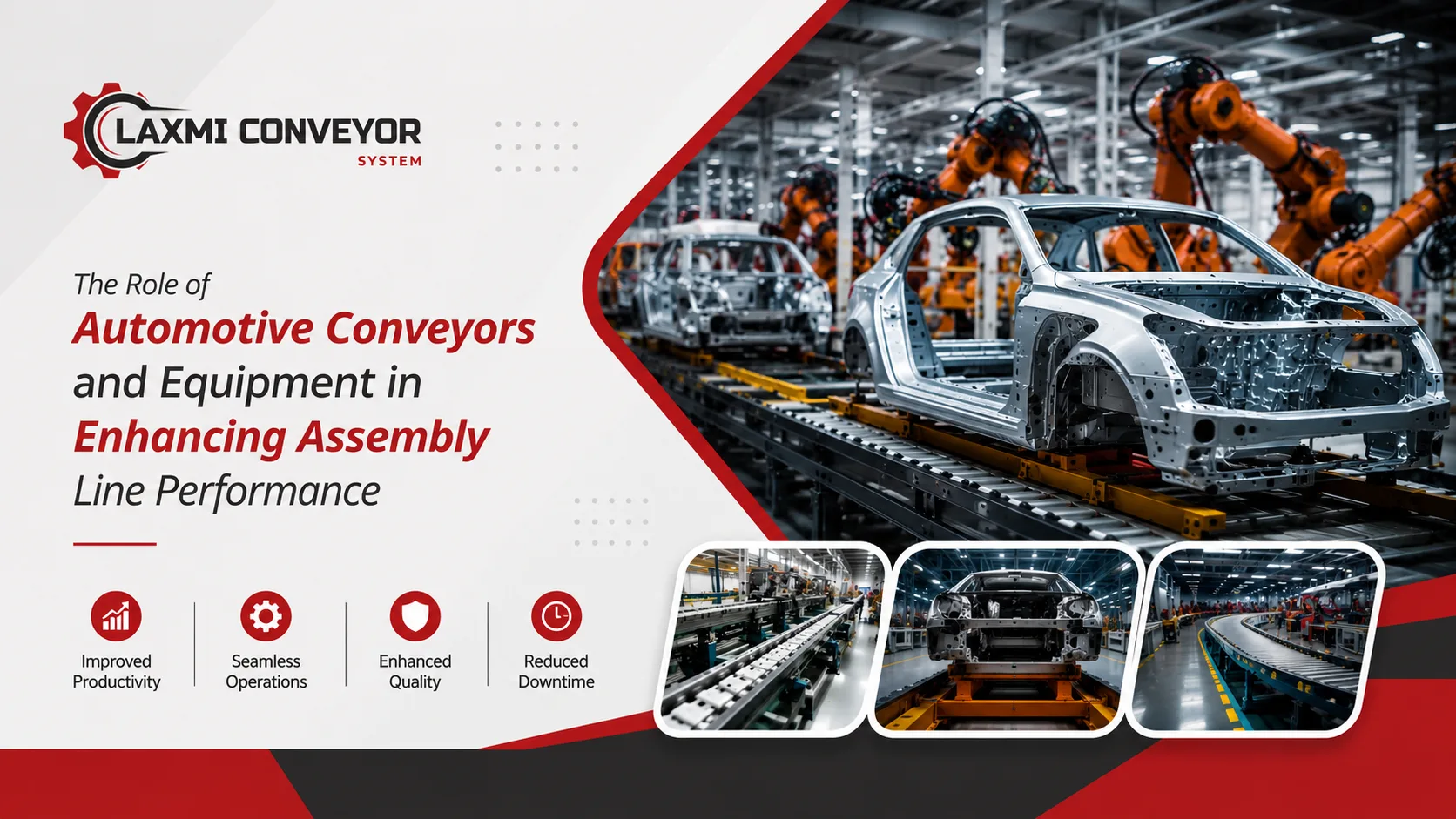
The automotive industry is one of the most advanced manufacturing sectors in the world. From assembling vehicle components to transporting finished automobiles, every stage of production requires speed, precision, and efficiency. To achieve these goals, manufacturers rely heavily on modern material handling systems, especially automotive conveyors. These systems play a critical role in streamlining production processes, reducing manual labor, and ensuring smooth movement of materials throughout the facility.
At Laxmi Conveyor, we offer innovative conveyor solutions designed to meet the demanding requirements of the automotive sector. With increasing production volumes and the need for higher operational efficiency, investing in the right automotive conveyor system has become essential for manufacturers.
Importance of Conveyors in Automotive Manufacturing
Automobile production involves multiple stages, including component fabrication, assembly, painting, testing, packaging, and final dispatch. Moving materials manually between these stages can lead to delays, errors, and increased labor costs. This is where automotive conveyors provide significant value.
A well-designed automotive conveyor ensures continuous material flow, minimizes handling time, and improves workplace safety. By automating transportation within the production line, manufacturers can maintain consistent production rates while reducing operational bottlenecks.
Types of Automotive Conveyors
Different manufacturing processes require different conveyor systems. Several types of automotive conveyors are commonly used in automotive plants.
1. Belt Conveyors
Belt conveyors are among the most widely used systems in automotive manufacturing. They are ideal for transporting lightweight and medium-weight components such as panels, parts, and packaged items.
An automotive conveyor system based on belt technology helps improve workflow efficiency while ensuring gentle handling of components.
2. Chain Conveyors
Chain conveyors are designed for heavy-duty applications involving engines, chassis, vehicle bodies, and large assemblies. Many automotive manufacturers depend on chain-based automotive conveyors to move heavy vehicle components safely through production lines.
3. Overhead Conveyors
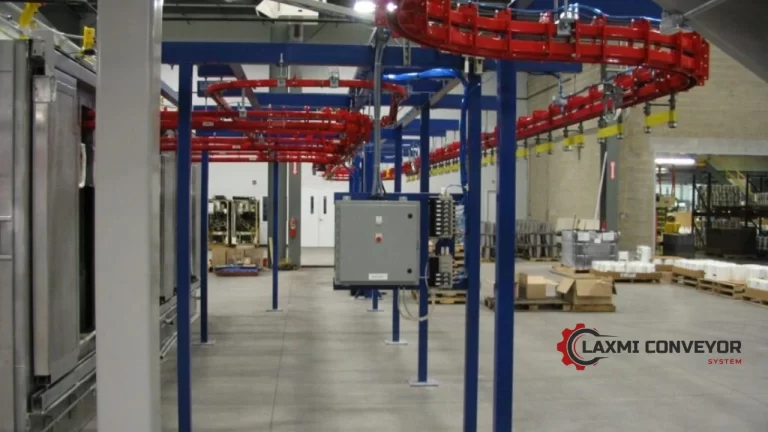
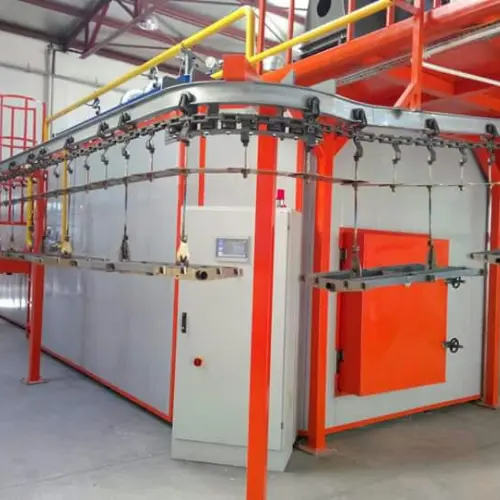
Overhead conveyor systems utilize suspended tracks to transport materials above the factory floor. These systems are commonly used in paint shops and assembly operations.
An overhead automotive conveyor system is especially beneficial in facilities where space optimization is a priority.
4. Roller Conveyors
Roller conveyors are frequently used for transporting pallets, containers, and assembled parts between production areas. These automotive conveyors are suitable for both manual and automated operations.
5. Towline Conveyors
Towline conveyor systems operate using a chain-driven towing mechanism embedded within the floor. They are ideal for moving vehicle frames and large assemblies through production stations. Many modern automotive facilities incorporate towline-based automotive conveyor solutions to streamline assembly processes.
Essential Equipment Used Alongside Automotive Conveyors
While automotive conveyors form the backbone of material handling operations, several additional equipment systems contribute to efficient production.
- Automated Guided Vehicles (AGVs): AGVs transport components and materials autonomously throughout manufacturing facilities.
- Lift Tables: Lift tables help position components at ergonomic working heights, improving worker safety and assembly efficiency.
- Turntables: Turntables rotate products and assemblies, enabling easier access during manufacturing and inspection processes.
- Robotic Handling Systems: Modern automotive plants increasingly use robotic systems integrated with automotive conveyor systems to automate repetitive tasks and enhance production accuracy.
- Storage and Buffer Systems: Buffer conveyors and storage systems help maintain continuous workflow by preventing interruptions between production stages.
Benefits of an Automotive Conveyor System
Investing in a high-quality automotive conveyor system offers numerous operational advantages.
- Improved Productivity: Automated material movement eliminates delays associated with manual handling, allowing production lines to operate more efficiently.
- Enhanced Safety: Conveyor systems reduce the need for workers to lift and transport heavy components, minimizing workplace injuries.
- Reduced Labor Costs: Automation decreases dependency on manual transportation, helping businesses control operational expenses.
- Consistent Production Flow: A properly designed automotive conveyor ensures smooth movement of materials throughout the facility, reducing bottlenecks and downtime.
- Better Quality Control: Automated systems improve process consistency, helping manufacturers maintain product quality standards.
Choosing the Right Automotive Conveyor
Selecting the right automotive conveyor system depends on several factors:
- Product weight and dimensions
- Production volume
- Facility layout
- Automation requirements
- Future expansion plans
At Laxmi Conveyor, we offer customized conveyor systems tailored to the specific needs of automotive manufacturing facilities. Our solutions are designed to maximize productivity, improve safety, and support long-term operational growth.
The automotive industry depends on efficient material handling systems to maintain high production standards and meet growing market demands. From belt and chain conveyors to overhead and towline systems, automotive conveyors play a crucial role in streamlining manufacturing operations.
A modern automotive conveyor not only improves productivity but also enhances safety, reduces labor costs, and supports automation initiatives. As automotive manufacturing continues to evolve, investing in a reliable automotive conveyor system becomes increasingly important for maintaining competitiveness and operational excellence. At Laxmi Conveyor, we offer advanced conveyor solutions that help automotive manufacturers optimize workflows, improve efficiency, and achieve sustainable production success.