In modern manufacturing and material handling operations, conveyor systems play a crucial role in improving productivity, reducing manual labor, and ensuring smooth workflow. Whether it is a warehouse, packaging facility, food processing plant, automotive factory, or logistics center, conveyors help move materials efficiently from one point to another. Understanding the various types of conveyor systems available can help businesses choose the right solution for their operational needs. At Laxmi Conveyor, we offer customized conveyor solutions designed to meet the requirements of different industries.
There are many types of conveyors designed for specific applications, load capacities, and environments. Each system offers unique advantages depending on the material being transported and the production process involved.
Below are the 10 most commonly used conveyor types in industrial applications.
1. Belt Conveyor
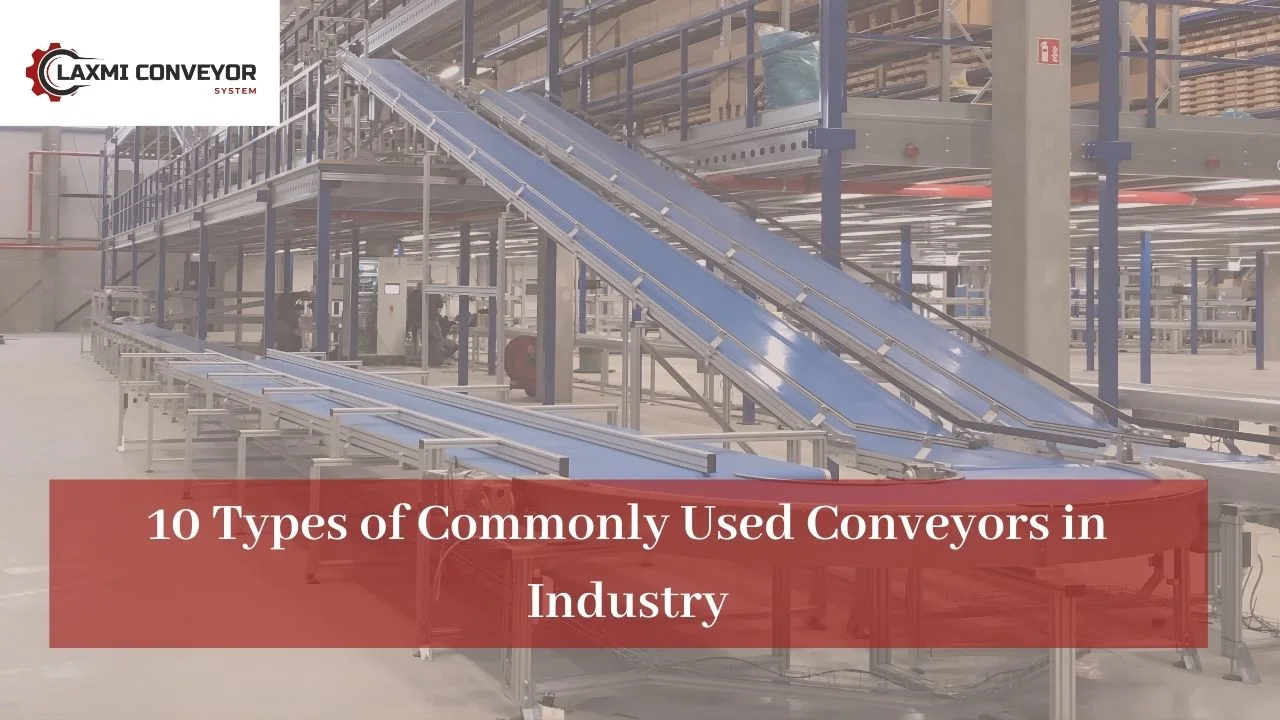
A belt conveyor is one of the most widely used different types of conveyors in manufacturing and distribution facilities. It consists of a continuous belt that moves over rollers or pulleys to transport products and materials. The belt conveyor remains one of the most versatile conveyor systems available today.
2. Roller Conveyor
Roller conveyors use a series of rollers mounted within a frame to move products. Materials can move either by gravity or powered rollers depending on operational requirements. Among all types of conveyor systems, roller conveyors are particularly popular for material handling operations involving boxed products.
3. Chain Conveyor
Chain conveyors utilize continuous chains to transport heavy products across production lines. They are designed for rugged industrial environments where durability is essential.
This type of conveyor is ideal when strength and load-bearing capacity are critical requirements.
4. Screw Conveyor
A screw conveyor uses a rotating helical screw blade inside a tube or trough to move bulk materials. It is commonly used for transferring powders, grains, and other loose materials. Among various conveyor types, screw conveyors are highly effective for handling bulk materials.
5. Slat Conveyor
Slat conveyors feature interconnected slats attached to chains that move products through production lines. They are designed to transport items that may not be suitable for belt conveyors. This is one of the most reliable different types of conveyors for industrial production environments.
6. Bucket Conveyor
Bucket conveyors use a series of buckets attached to a belt or chain to lift and transport bulk materials vertically. When vertical material movement is required, bucket conveyors are often the preferred type of conveyor.
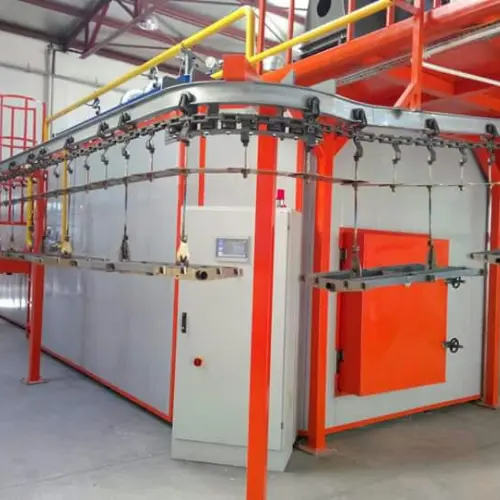
7. Overhead Conveyor
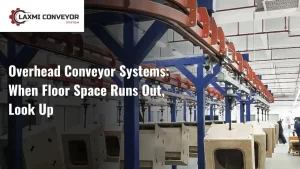
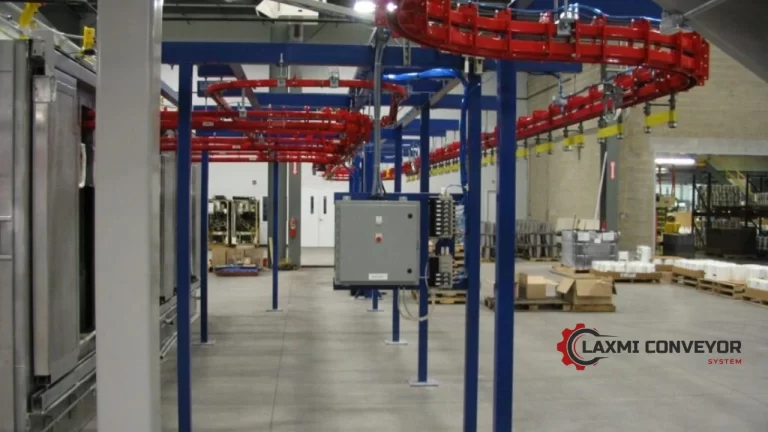
Overhead conveyors suspend products from tracks mounted above the work area. This design maximizes floor space while maintaining efficient material movement. These types of conveyors are particularly useful where workspace optimization is important.
8. Pneumatic Conveyor
Pneumatic conveyors use air pressure or vacuum systems to transport powders, granules, and lightweight materials through enclosed pipelines. Among modern conveyor types, pneumatic systems offer excellent hygiene and cleanliness standards.
9. Vibrating Conveyor
A vibrating conveyor transports materials using controlled vibration. The vibration gently moves products along the conveyor surface without requiring belts or chains. This type of conveyor is commonly selected when product integrity must be maintained during transport.
10. Flexible Conveyor
Flexible conveyors are portable systems that can expand, contract, and bend according to workspace requirements. They offer exceptional versatility in dynamic environments. Among all different types of conveyors, flexible
Also Read : Vertical Conveyors: Types, Uses and Benefits
How to Choose the Right Conveyor System
Selecting the right conveyor system is essential for improving productivity, reducing handling costs, and ensuring smooth material flow. The best conveyor depends on your industry, product type, and operational requirements.
- Understand Your Material: Identify the size, weight, shape, and nature of the material being transported. Different products require different conveyor solutions.
- Consider Load Capacity: Choose a conveyor that can safely handle your current and future load requirements without affecting performance.
- Evaluate Available Space: Measure the installation area and select a conveyor layout that maximizes floor space and workflow efficiency.
- Check Speed Requirements: The conveyor speed should match your production rate to avoid bottlenecks and maintain continuous operations.
- Assess Environmental Conditions: Factors such as dust, moisture, temperature, and chemical exposure can influence the type of conveyor system required.
Why Choose Laxmi Conveyor?
- Customized Conveyor Solutions: We design and manufacture conveyor systems tailored to your specific industry and material handling requirements.
- Quality Manufacturing: Our conveyors are built using high-quality components to ensure durability, reliability, and long service life.
- Advanced Engineering: We use modern technology and innovative designs to improve efficiency, productivity, and operational performance.
- Timely Delivery: Our team ensures projects are completed and delivered on schedule to minimize downtime and keep operations running smoothly.
- Complete Support: We offer installation assistance, technical guidance, and after-sales support for hassle-free operation.
- Cost-Effective Solutions: Laxmi Conveyor delivers high-performance conveyor systems at competitive prices, helping businesses maximize their return on investment.
Understanding the various types of conveyors available in the market is essential for selecting the right material handling solution. From belt and roller systems to pneumatic and overhead conveyors, each type of conveyor offers distinct advantages based on operational requirements.
By evaluating different conveyor types, businesses can improve efficiency, reduce labor costs, and streamline production processes. Whether you require standard systems or customized solutions, Laxmi Conveyor can offer high-quality conveyor equipment designed to meet the demands of modern industries and support long-term business growth.