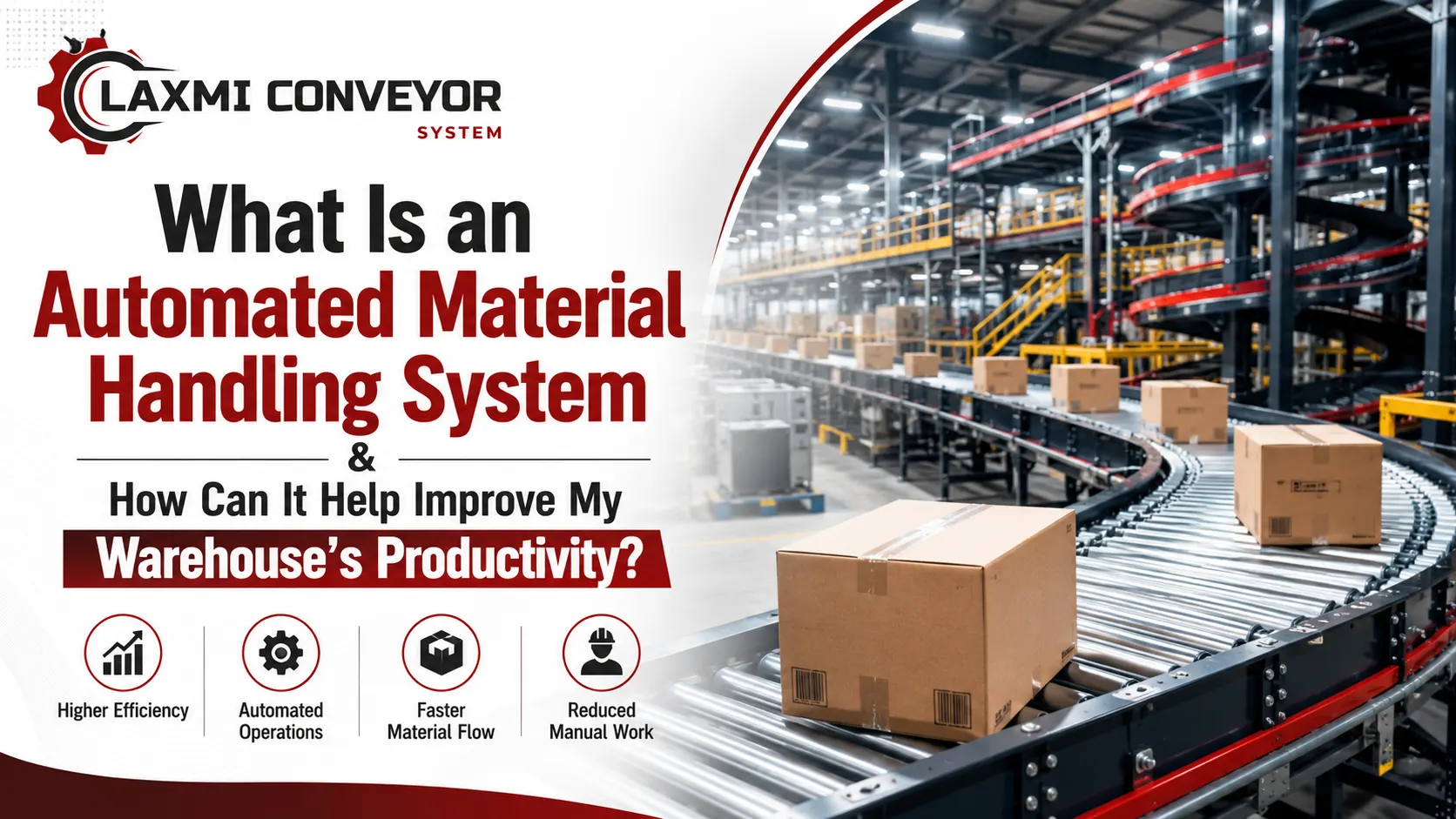
Warehouses today handle more products, orders, and deliveries than ever before. With growing customer expectations and the need for faster order fulfillment, depending completely on manual material movement can become challenging. This is where an automated material handling system can make a real difference. Instead of relying on workers to move every product from one place to another, automated equipment can transport, sort, lift, store, and retrieve materials with less manual effort. Laxmi Company understands the changing needs of modern warehouses and can offer practical material handling conveyor designed to make product movement more organized and efficient. With the right automation setup, businesses can reduce repetitive work and allow employees to focus on more important tasks.
What Is Automated Material Handling?
Automated material handling refers to the use of machinery, conveyors, sensors, software, and control systems to move and manage goods within a warehouse or industrial facility. The level of automation can vary depending on the size of the operation and the type of materials being handled. A basic setup may include powered conveyors for moving cartons between workstations, while a more advanced facility can integrate automated storage and retrieval systems, sortation equipment, robotic solutions, scanners, and warehouse management software.
How Does Material Handling Automation Work?
Material handling automation works by combining mechanical equipment, sensors, control technology, and software to move products through a facility with minimal manual involvement. Instead of having workers repeatedly carry, push, or transfer materials between different sections, an automated setup creates a planned route for products to follow.
The process usually begins when materials enter the warehouse or production area. Conveyors, lifts, or other handling equipment receive the products and move them toward their next destination. Sensors can identify the presence, position, or movement of an item and send information to the control system. Based on the programmed instructions, the system can then decide whether the product should continue forward, change direction, stop, or move to another section.
Key Benefits of an Automated Material Handling System
An automated material handling system can provide several benefits when properly designed around a warehouse’s actual requirements.
1. Faster Material Movement
Automation can help move products continuously between different areas of a warehouse. Unlike manual transportation, conveyors and other automated equipment can maintain a consistent material flow throughout operating hours.
This can reduce unnecessary waiting time between receiving, storage, picking, packing, and dispatch operations.
2. Improved Productivity
One of the biggest reasons companies invest in automation is productivity. When repetitive transportation tasks are automated, employees can spend more time on productive activities.
A well-planned system can help warehouses process a greater number of products without simply increasing the amount of manual labor.
3. Better Accuracy
Manual handling can sometimes result in misplaced products, incorrect routing, or unnecessary movement. Automated equipment combined with tracking and control technology can help reduce these issues.
Accurate movement is particularly important for warehouses handling a large number of products or frequent orders.
4. Improved Workplace Safety
Moving heavy cartons, pallets, or other materials manually throughout the day can increase physical strain on employees. Automated handling systems can take over many repetitive transportation activities. This can help reduce unnecessary lifting, pushing, pulling, and carrying, potentially creating a more comfortable working environment.
5. Better Space Utilization
Automation can also help businesses make better use of available warehouse space. Conveyors, automated storage systems, vertical handling equipment, and carefully planned layouts can help organize material movement within limited areas.
Better space utilization can be particularly valuable when warehouse expansion is difficult or expensive.
Material Handling Automation Solutions for Modern Warehouses
Modern material handling automation solutions can be customized to suit different industries and warehouse environments. A small distribution center may only require an automated conveyor line, whereas a large fulfillment facility may need an integrated system covering receiving, storage, picking, sorting, packing, and dispatch.
Before implementing automation, businesses should examine their current workflow. Identifying repetitive tasks, bottlenecks, unnecessary movement, and areas where errors occur can help determine where automation will provide the greatest value. It is also important to consider future growth. A system designed with scalability in mind can make it easier to increase capacity as business requirements change.
Choosing the Right Automation Partner
Choosing the right supplier is an important part of a successful automation project. The equipment should be selected according to actual operating conditions rather than simply choosing the most advanced technology available. Laxmi Conveyor understands the importance of designing material movement around the practical needs of a facility. Our company can offer conveyor and material handling solutions designed to support efficient product movement and help businesses improve their overall workflow.
An automated material handling system can transform the way a warehouse moves and manages products. By automating repetitive transportation tasks, businesses can improve productivity, reduce unnecessary manual movement, enhance accuracy, use warehouse space more effectively, and create a more organized workflow.
From conveyors and sortation equipment to advanced automated storage and robotic technologies, there are many options available for different levels of automation. The key is to choose material handling automation solutions that match the facility’s current requirements while allowing room for future growth.