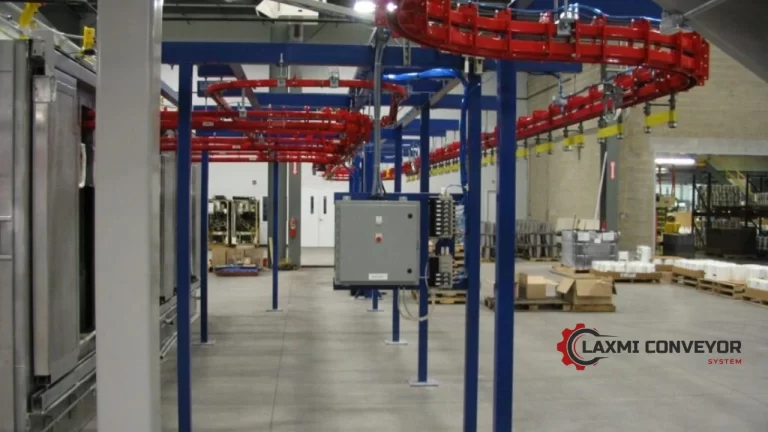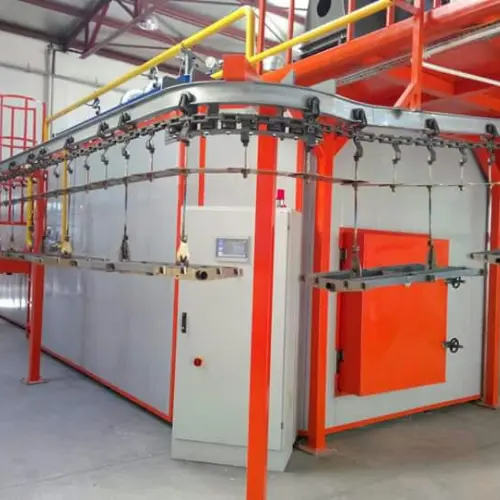
Laxmi Conveyor is a trusted name in the material handling industry, known for engineering smart, durable, and efficient systems that simplify industrial operations. We provide customized monorail solutions that fit the unique needs of different industries, ensuring smooth operations and higher productivity. Among our advanced solutions, the Monorail Conveyor system stands out as a reliable and cost-effective choice for moving materials seamlessly within a facility. With its simple yet highly functional design, a monorail system is widely used in manufacturing, warehousing, assembly lines, and heavy-duty industrial environments.
A Monorail Conveyor is a single-track overhead system designed to transport materials from one point to another using a monorail beam. These systems can be manual, motorized, or automated, depending on the workflow requirements. Because of their efficiency and flexibility, monorail systems are also used in lifting applications, often referred to as monorail crane systems.
Key Components of a Monorail Conveyor
To function smoothly and safely, monorail systems include several essential components. These include:
- Monorail Beam: The monorail beam is the core structural element that supports the entire system. It is typically made from high-strength steel to ensure durability and load-bearing capacity.
- Trolleys: Trolleys carry the load and move along the monorail beam. Depending on the system type, trolleys may be manual, motorized, or automated.
- Drive Unit: In motorized or automated systems, the drive unit powers the trolleys for smooth and controlled movement.
- Load Carriers: These platforms or hooks hold the material securely during transportation.
- Control System: Automated monorail conveyors include control panels, sensors, and software for monitoring speed, direction, and safety parameters.
Also Read : Conveyor System Design: Building the Collaborative Future of Manufacturing
Types of Monorail Conveyor Systems
Monorail conveyors come in different forms depending on the application, load type, and movement pattern. The major types include:
- Manual Monorail Conveyors: These systems use human effort to push the load along the monorail beam. They are ideal for lightweight materials, short distances, and simple workflows. Manual monorail systems are cost-effective and easy to install.
- Motorized Monorail Conveyors: Motorized monorail conveyors operate using electric or pneumatic power, enabling the movement of heavier loads with greater speed and precision. Laxmi Conveyor designs these systems with safety, smooth operation, and energy efficiency in mind.
- Automated Monorail Conveyors: In advanced industries like automotive, electronics, and large manufacturing units, automated monorail conveyors integrate sensors, controls, and robotic movement. These systems support high-speed production and reduce human intervention, improving overall efficiency.
- Monorail Cranes: When used specifically for lifting and transferring heavy loads, monorail conveyors are often designed as monorail cranes. These are commonly used in warehouses, foundries, workshops, and assembly lines to lift loads directly along a fixed path on the monorail beam.
Specifications of a Monorail Conveyor System
While specifications vary based on design, below are the general parameters considered during installation:
- Load Capacity: Typically ranges from 50 kg to several tons depending on the application.
- Beam Type: High-strength steel monorail beam with customized lengths.
- Speed: Manual push operation or motorized speeds ranging between 5 to 60 m/min.
- Structure Material: Powder-coated or galvanized steel to ensure corrosion resistance.
- Power Source (Motorized Systems): Electric or pneumatic drive units.
- Mounting Type: Ceiling-mounted, wall-mounted, or floor-supported depending on space availability.
Advantages of a Monorail Conveyor
Monorail conveyors offer multiple benefits that make them essential in modern industrial setups:
- Efficient Space Utilization: Since the system is mounted overhead, it clears valuable floor space for production activities.
- Cost-Effective Movement: The system reduces manpower requirements and improves workflow speed, resulting in cost savings.
- Increased Safety: By keeping loads suspended overhead, monorail conveyors reduce workplace accidents and improve handling safety.
- High Flexibility: Systems can be tailored for curved tracks, switches, elevation changes, and automated routing.
- Low Maintenance: With fewer moving parts, monorail conveyors require minimal maintenance compared to conventional systems.
Applications of Monorail Conveyors
Monorail systems are used across a wide range of industries due to their versatility, strength, and reliability. Key application areas include:
- Automotive Manufacturing: For moving car bodies, components, and assemblies.
- Warehousing & Logistics: For transporting goods efficiently along fixed routes.
- Metal & Foundry Operations: Suitable for carrying molten metal pots and heavy castings.
- Textile & Garment Industries: For seamless movement of materials in production lines.
- Electronics Assembly: For precise and clean material handling.
- Food Processing Units: For hygienic overhead transport systems.
- Workshops & Fabrication Units: Often used as monorail cranes for lifting heavy tools and parts.
In today’s fast-paced industrial world, an efficient and reliable material handling system is essential for smooth operations, and the Monorail Conveyor stands out as one of the most practical solutions. Laxmi Conveyor aims to offer the best-in-class Monorail Overhead Conveyor solutions that enhance operational efficiency, reduce downtime, and support industries in achieving higher productivity. We ensure each Monorail Overhead Conveyor system is designed to match precise load, movement, and environmental conditions for long-lasting performance.